Amazon Music FanCut
Empowering Fan Creation to Drive Amazon Music Engagement
Overview
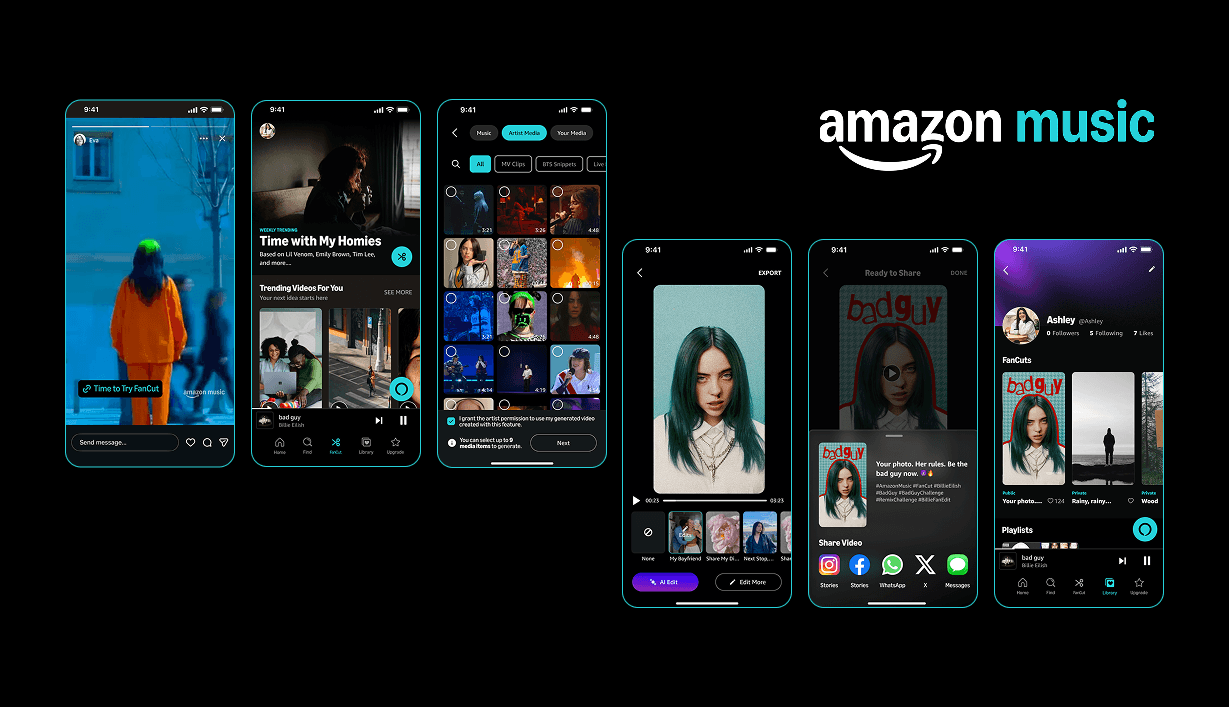
Designed FanCut, an AI-powered remixing tool to boost fan creation, engagement, and retention, allowing users to turn licensed tracks into personalized, shareable videos and express their fandom through creative creation directly on Amazon Music.
My Role
Prototyping Motion & Interaction
Ideating AI-assisted editing workflows
Leading weekly sync with mentors
Team
Gloria Yang (Me)
Youyuan Wang
Timeline
4 weeks
Feb – Mar 2026
Context
Access to Music Isn’t Enough to Drive Engagement on Amazon Music
Amazon Music offers seamless access to a vast music library, but so do most streaming platforms. Listening has become a baseline expectation, not a differentiator.
For users already engaged with other platforms, there is little incentive to switch or stay. Without a compelling experience beyond playback, Amazon Music struggles to stand out or give users a reason to actively engage.
Problem
Users Can Listen to Music, But Can’t Meaningfully Engage With It
While Amazon Music enables seamless music playback, the experience is largely one-directional. Users can listen to songs, but have limited ways to interact with artists or express their connection to the music.
There are few opportunities to create, share, or participate in fandom within the platform. As a result, listening becomes a passive activity, making it difficult for users to stay engaged or build a deeper relationship with the content.
18%
Cancellation rate after the free trial period
60% +
of users turn off auto-renewal on day one
92%
of platform choice is driven by artist catalog availability
Target User
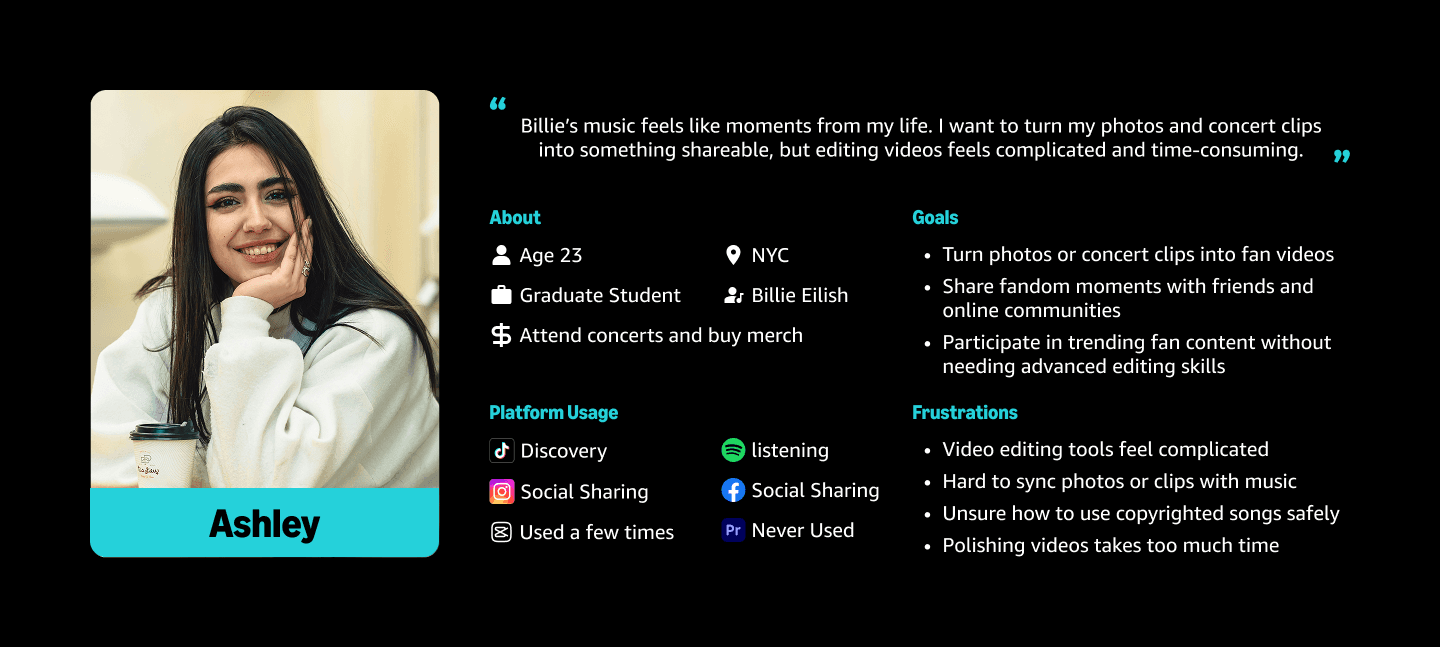
Designing for Fans with Creative Intent
We focused on emotionally engaged fans who actively follow artists and want to participate in fandom culture. While their motivation to create is strong, they are often blocked by editing complexity, copyright concerns, and lack of accessible tools.
Research Key Insights
Fans Want to Create With Music, But Lack Accessible Tools
We focused on emotionally engaged fans who actively follow artists and want to participate in fandom culture. While their motivation to create is strong, they are often blocked by editing complexity, copyright concerns, and lack of accessible tools.
Fans engage through creation, not just consumption
Fans express identity through remixing, edits, and sharing content, especially on social platforms.
Creation is blocked by complexity and uncertainty
Most users lack editing skills and are unsure about copyright, making remixing feel inaccessible.
Sharing drives engagement loops
Music-related content spreads through social sharing, but current streaming platforms don’t support this behavior natively.
Solution
Turning Music Listening into a Creative and Shareable Experience
We designed FanCut, an AI-powered remixing tool integrated into Amazon Music, that transforms music into shareable content. FanCut enables users to create personalized videos directly within the platform.
FanCut allows users to remix licensed tracks, generate videos with AI assistance, and create personalized fan content directly within the platform, without requiring advanced editing skills.
How it Works
A Continuous Loop
Discover → Create → Share → Re-engage
FanCut is designed as a closed-loop experience where creation drives discovery, and discovery drives more creation.
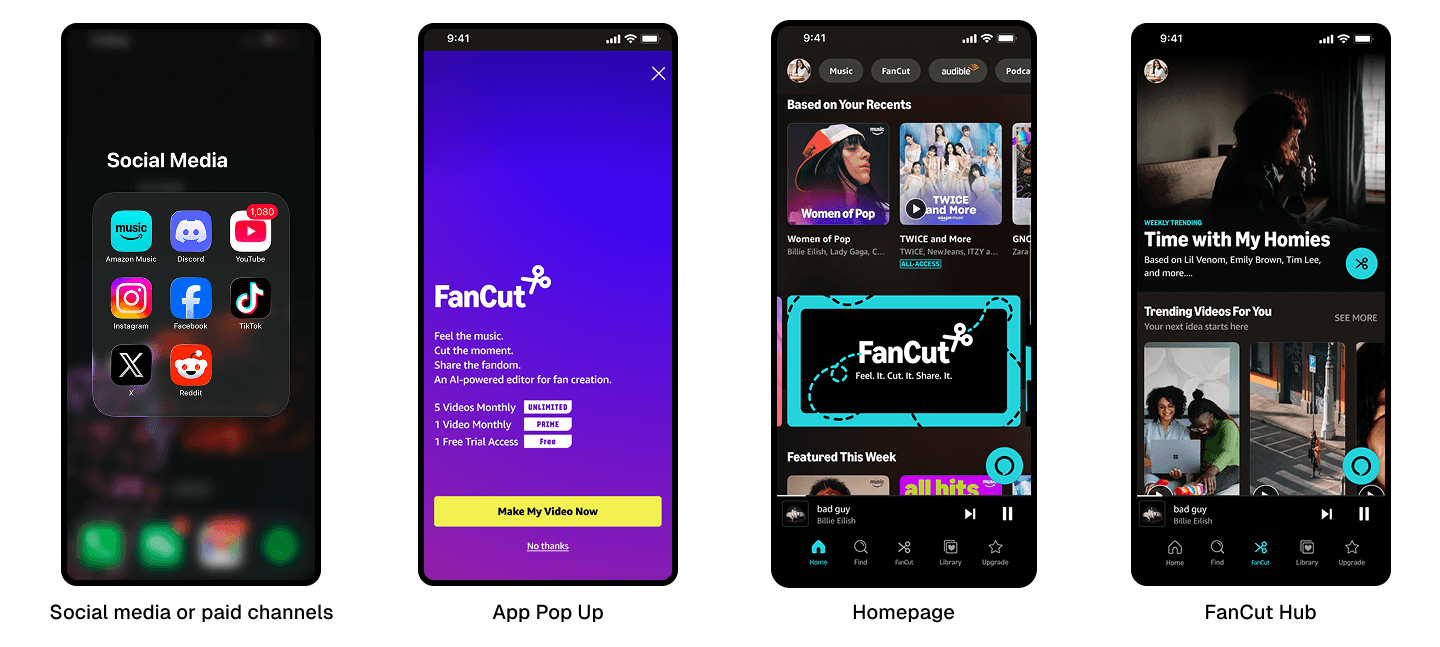
Fans first encounter remix content through social media, paid campaigns, or contextual entry points within Amazon Music. These moments naturally lead them into FanCut, where they can create their own remix using licensed music and AI-assisted tools. Once shared, these creations circulate across platforms and within the Amazon Music ecosystem, becoming new entry points for other users. As fans return to see how others engage with their content, they are encouraged to create again, reinforcing an ongoing cycle of participation.
Discovery
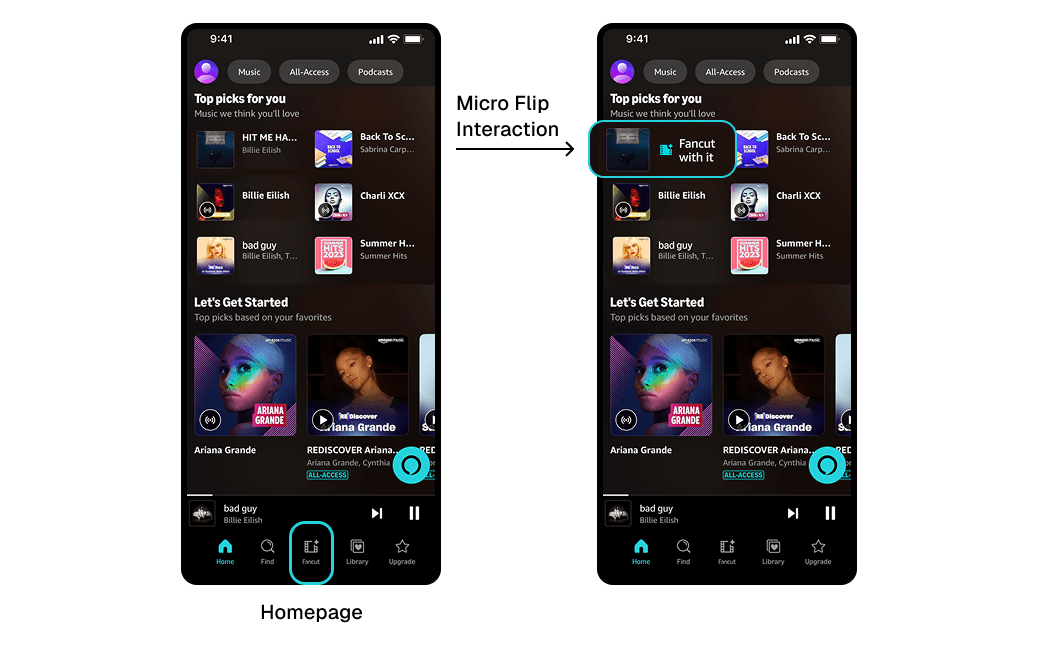
Fans first encounter FanCut through social platforms, in-app surfaces, or Amazon’s broader ecosystem. Short-form videos, paid campaigns, and contextual prompts introduce remix culture and invite users to participate.
These entry points are designed to meet users where they already engage with music, making discovery feel organic rather than forced.
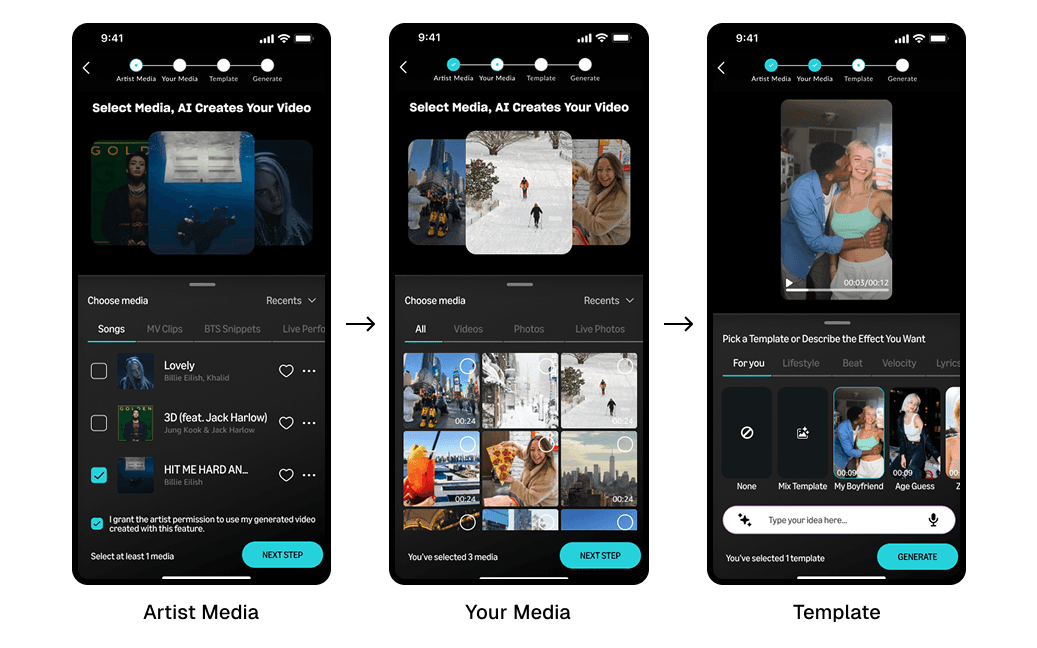
Choose Media
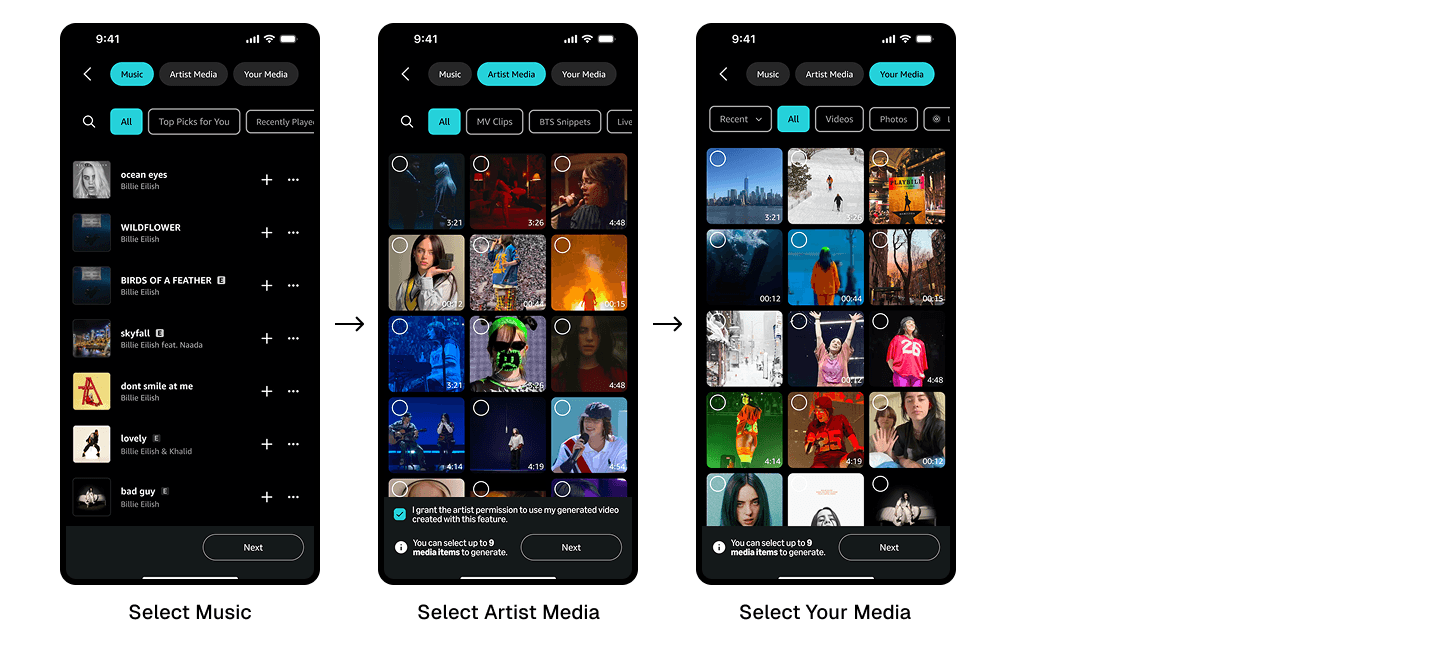
To begin creating, fans select a song, which unlocks access to both official artist media and their own personal content.
This step bridges artist content with user expression. By default, fans grant permission for artists to use fan-generated content, supporting a shared creative ecosystem, while still allowing users to opt out for control and privacy.
Creation
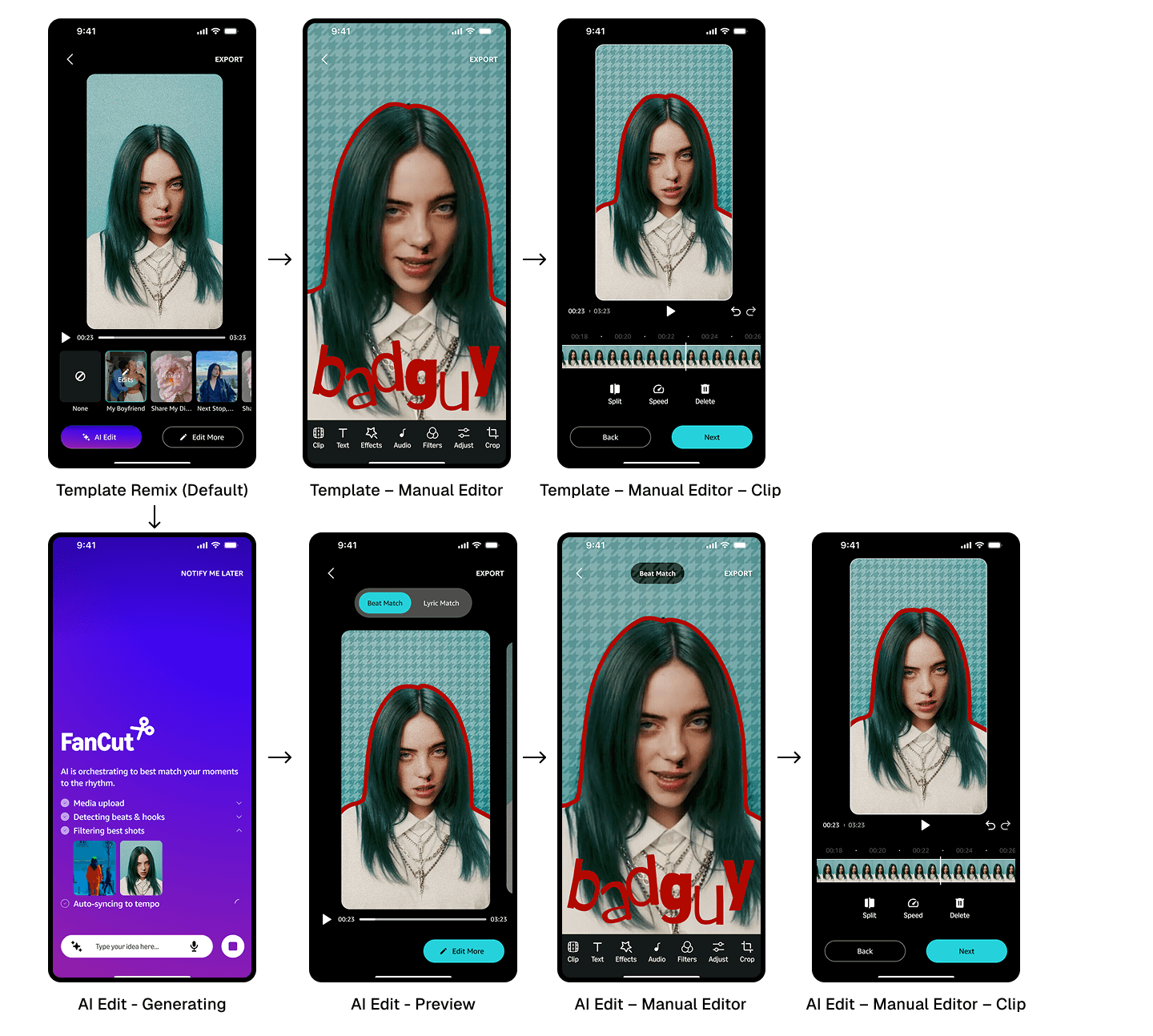
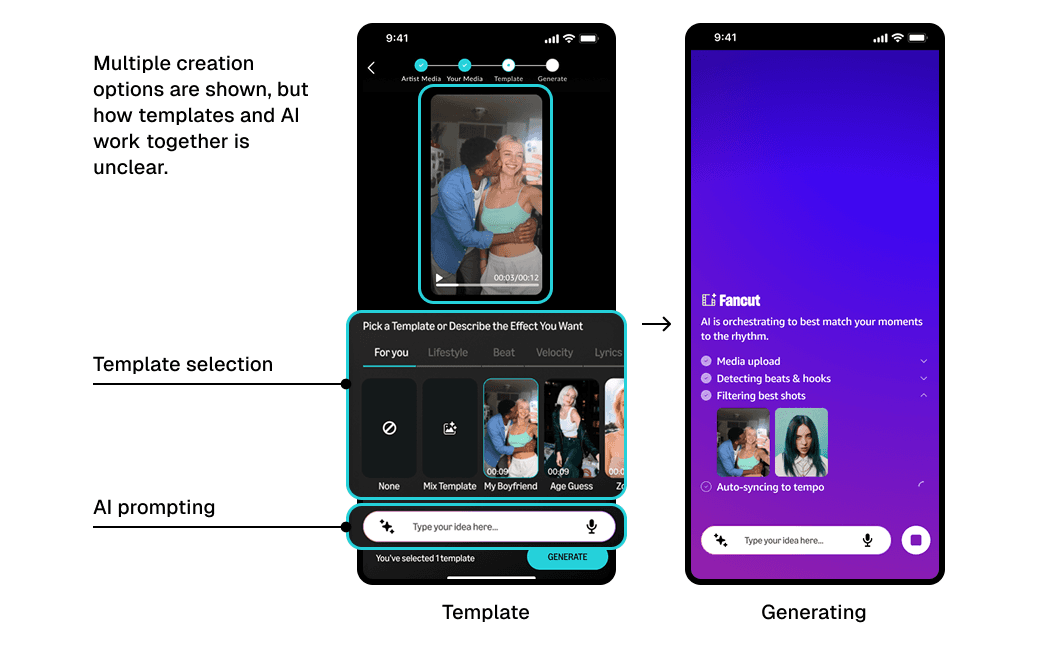
Once media is selected, FanCut generates remix options through curated templates or AI-assisted editing.
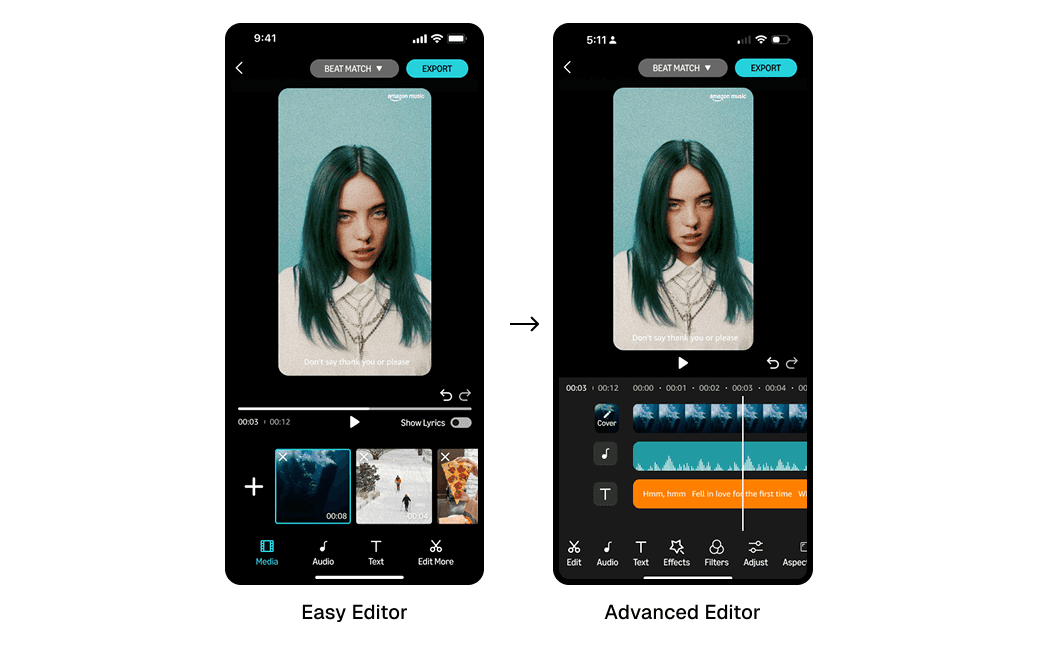
The AI analyzes rhythm, lyrics, and visual content to produce a structured video, giving users an instant starting point. For those who want more control, the experience supports deeper editing, allowing users to refine or fully customize their remix.
This balance ensures that both casual users and more expressive creators can participate.
Share & Re-engage
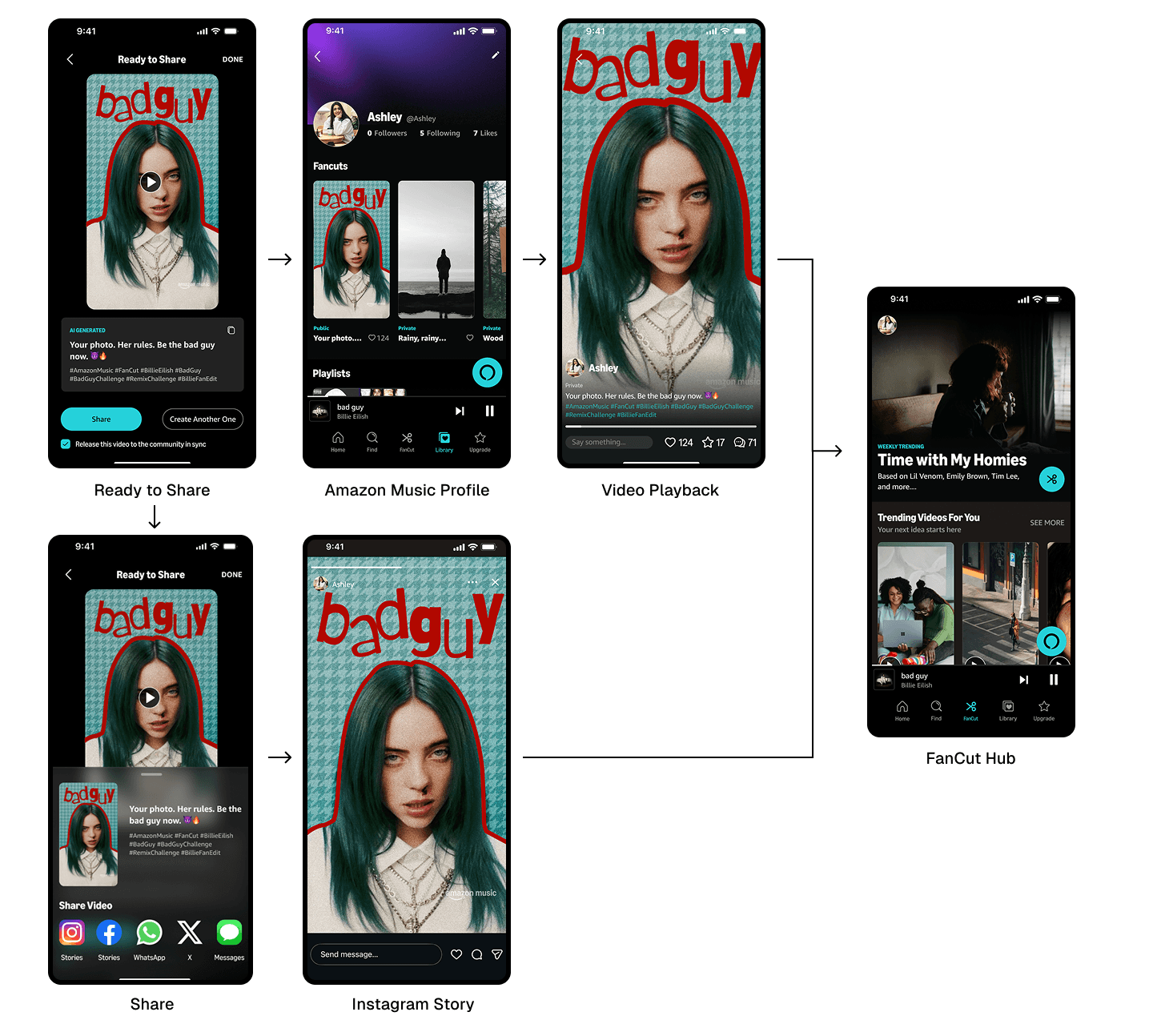
After finalizing their remix, users are guided to a ready-to-share screen with a preview of the video, along with AI-generated captions and hashtags to simplify sharing.
From here, fans can publish their content across social platforms or within Amazon Music. By default, creations are also shared to the Amazon Music community, increasing visibility and reach.
As users return to see how others interact with their content through likes, comments, and saves, their remix is also surfaced within the listening experience. This reinforces their connection to the music and encourages continued creation, completing the engagement loop.
Impact Overview
Increased Engagement
By enabling remixing, users actively interact with music rather than passively consuming it. This increases time spent in the app and the number of meaningful interactions per session.
Reduced Early Churn
The loop of creating, sharing, and receiving feedback (likes, comments, saves) encourages repeat usage, helping address early drop-off behaviors such as users turning off auto-renewal after onboarding.
Organic User Growth
Remix videos shared across social platforms act as organic marketing channels, bringing new users into the platform through fan-driven content.
Stronger Differentiation
While most platforms compete on content access, FanCut introduces a unique participatory experience, giving users a reason to choose and stay with Amazon Music beyond its music library.
Design Approach
Validating the AI Remix Approach with Users
FanCut introduces a new type of interaction within a music streaming platform, combining AI-assisted creation with a multi-step workflow. To explore this space efficiently, I focused on rapidly testing different interaction patterns and levels of AI involvement before committing to a single direction.
This led to a prototyping approach centered on quickly translating ideas into interactive experiences, allowing me to evaluate how users understand remixing, where they encounter friction, and how much control they expect in the process.
Option 1
Media-First Creation
Option 2
Template-Driven Creation
Option 3
Music-First AI Remix
After exploring multiple creation workflows, we tested these directions with fans to understand which approach best supports ease of creation, clarity, and overall engagement.
User feedback showed strong interest in the concept and validated the potential of AI-assisted remixing as a new way to interact with music.
Results
68.3%
said FanCut would make the platform more engaging
63.3%
expressed willingness to try the feature
45%
reported strong intent to use Amazon Music because of it
Based on these insights, we refined the selected direction and developed a high-fidelity prototype in Figma to further evaluate usability and interaction details.
Testing & Iteration
Refining the Experience Through User Feedback
Testing the high-fidelity prototype revealed key friction points in the remixing experience. These insights guided a series of improvements to make the workflow clearer, more flexible, and easier to use.
Reflection
Designing Faster, Thinking Broader, and Iterating Deeper
This project reinforced the value of rapid prototyping as a way to explore ideas quickly and test them early. Working through multiple concepts in parallel allowed me to iterate faster, validate assumptions sooner, and avoid over-investing in a single direction too early.
It also pushed me to think beyond design execution and consider product decisions from a broader perspective. With guidance from a PM mentor, I began evaluating how a feature like FanCut contributes to business growth, the cost of building such feature, the level of engineering effort required, and how it strengthens the product’s position in the market.
Given more time, I would further test the experience with a wider range of users and refine the workflow to better handle edge cases. This would help ensure the system remains intuitive and scalable as the feature evolves.